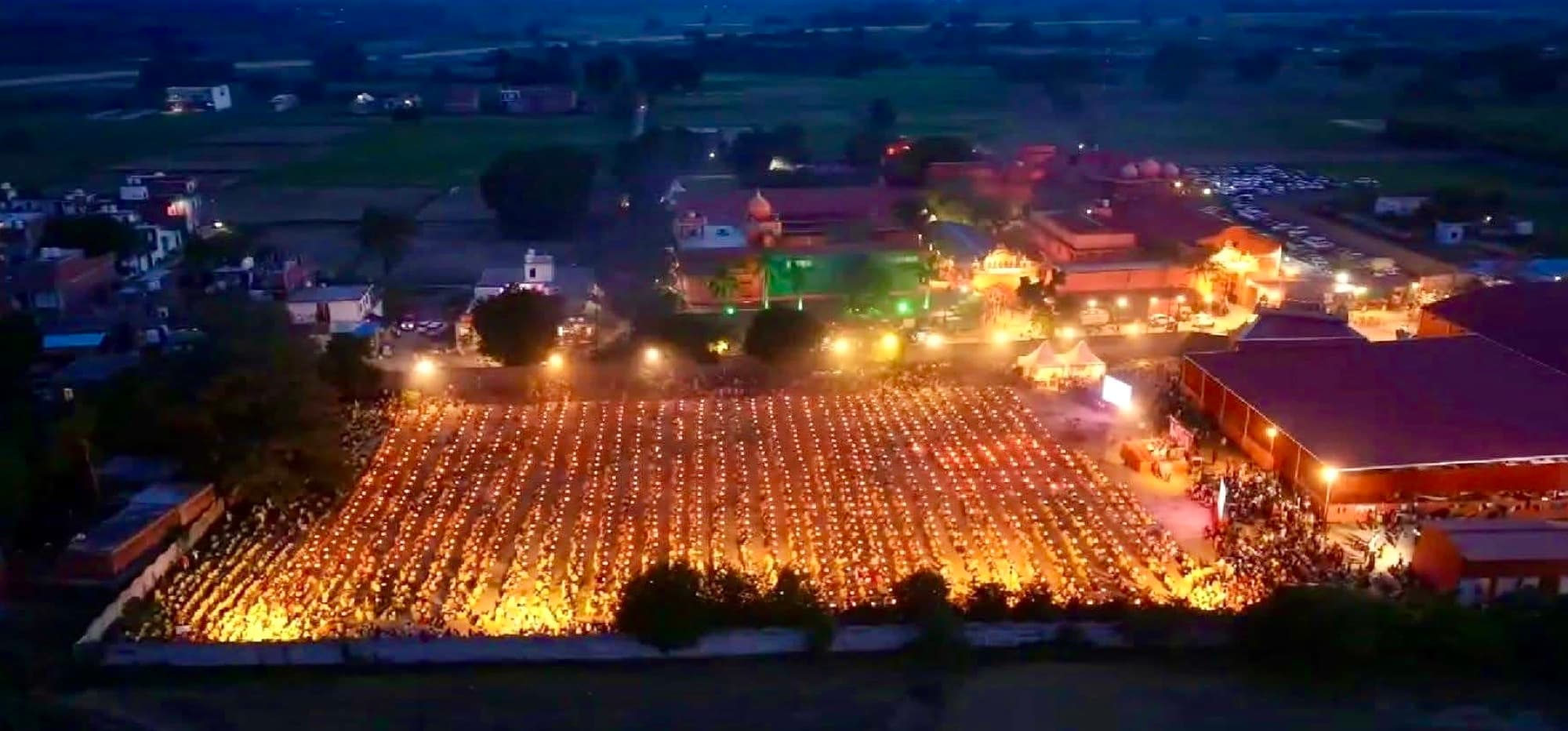
Once again, a very warm welcome to you all in the Darbar. Our resolve is to celebrate the festival of Guru Purnima over four days; today is its second day. Many congratulations to you all on the festival of the Guru.
As I did already yesterday, let me introduce again those who are among us. The Akhara in which my consecration as Mahamandaleshwar took place, and those by whose hands it took place, are seated here among us. Dhani Das Ji Maharaj is not among us; he is in Punjab. With us is the venerable mukhya mahant of our Shri Panchayati Akhara Naya Udasin Nirvan, Shri Bhagat Ram Ji — let everyone welcome him. He is worthy of reverence; he is as a Guru to us. And with us is the secretary of the Akhara, Mahant Shri Jagtar Muni Ji.
In our Akhara you will see ordinary people. But their gifts are extraordinary, and all their work is extraordinary.
It was in such an Akhara that the consecration took place — and to be received into it is for a lifetime. It is with this Akhara that the venerable Baba was connected. And with this same Akhara Baba's own Guru, the Naga, was connected as well. That is why we took up this tradition as our own.
And this is what Baba says: you too, in just the same way, are devotees and disciples of Shri Panchayati Akhara Naya Udasin Nirvan; you are in that same tradition. Whenever large programmes are held, or even small camps, they will be held at the Akhara as well — so that you become well acquainted with it too, and so that the tradition gains strength to carry forward.
Discourse: Samskaras and conduct (Acharan)
All our great men and gurus made immense effort to make life easier for humanity. Our rishis and munis did enormous work on how one may live more simply. Because of them our life is truly easy. Had it not been for these great men — who gave up every worldly pleasure and royal comfort and made the forests and mountains, solitude, their home — we would never have known the art of a happy life.
Guru Purnima is therefore the day on which we express deep reverence to all gurus. It is the day on which we bow before those who taught us how to live, and pray to them, and make our vow before them.
This land is the land of rishis and maharishis. It is the land of gurus. It is the land of Samskaras — of values and moral patterns. Here everything rests on Samskaras. One who has Samskaras is called a human being. One who has none — even if he has the body of a man — is called an animal, a demon (rakshasa).
We must therefore recognise the Samskaras. We must take the matter to its depth. First one must listen attentively, then contemplate (manan). After contemplation a further process begins: when the knowledge (bodha) comes to you that this is the truth, then your vow arises, that you will live in this way. And when you then truly live so, it is called Acharan — conduct, behaviour. That is samskara.
The next generation is shaped by your conduct and your Samskaras: through them it is able to live rightly, to live happily, to walk the path you have shown. But if you yourself cannot walk rightly, give up the hope that the next generation will go well. For whatever passes to them will pass from you.
We must therefore attend to our own conduct and be constantly vigilant towards it — because those who come after you are watching you. Just as all of you watch me: “What is Guruji doing? If Guruji makes a mess of something, we will admonish him at once.” And I in turn watch you closely: if you do something wrong, I will reprimand you immediately — at once, very sharply.
So watch over one another. When the Guru errs, do not hesitate for a second to stop him and admonish him. Say straight away: “Guruji, I do not like this about you. If you are doing it, explain why.” Ask for the reason.
When you sometimes stand before me, many say: “Gurudev, I have great suffering.” And I ask: “Tell me, what did you spoil?” — “Guruji, I have spoiled nothing.” And then I show him: this and this you spoiled. And he says: “Yes, Guruji, I did that.” Who then will bear the fruit of that deed? You. And when the Guru errs, the Guru will bear it — and a still greater punishment belongs to the Guru. The disciple receives a lesser punishment, but if the Guru errs, he receives a hard one. Always remember this.
You too, from being Baba's disciples, are moving slowly, step by step, towards becoming gurus. In every person the capacity to be a devotee (bhakta), to be a disciple and to be a guru is fully present. That seed is always present within. Whoever unfolds properly becomes a good bhakta, a good disciple and a perfect guru — like Baba.
It is a whole process. Just as a child is born today, slowly grows and grows old — so also within you, when the Samskaras are good, the next generation follows you. It is compelled to follow you. Therefore always attend to your conduct. Be vigilant, so that no mistake ever occurs.
The story of the little son and the lie
Let me tell you one small incident.
Our elder son — “Lo bhaiya” — was very small, he may have been about two years old. We were sitting together on the bed, talking about something or playing. Just then my wife came and began to speak to me about something. And meanwhile the telephone rang. Mobile phones did not exist then — it was that ringing house telephone.
She wanted to go on talking with me, so I said: “Pick it up and say that I am in the bathroom now and will speak when I come out.” That is what I said, and she went to the telephone.
Lo bhaiya looked at me — straight into my face. And the moment he looked into my face, I trembled inside. I had lied — and it penetrated right into the inner being of that child. He knew it.
I got up quickly and grabbed a towel: “Quick, hand me the towel, I am going to the bathroom, I will bathe and come.” I was trying to save it, so that it would look as though I really was in the bathroom.
When I came back washed and sat down to breakfast, my son — who used to sit with me and eat too — said his first sentence about it: “Papa, you lied just now.” I said: “Yes. I am sorry.” — “It does not matter,” and he began to eat. And with that it ended.
Had I tried to cover it up there — “No, no, I did not lie, I did go to bathe” — that small child had already seen through me. He understood that I was lying. Children register small things. You think: “He is little, what can he know, he is a child.” But he is not merely a child. He may sometimes have been your father. Remember that. He may have been your grandfather, your great-grandfather, he may even have been your guru. Today he is your child.
This we must always keep in mind. Towards our conduct we must be very vigilant. With pride I can say: to this day Lo bhaiya has never in his life told a lie. He studied in London and returned, but stayed with the work at home, in the family work. He is in it to this day. He looks after the running of the Darbar — together with the whole team. The foremost tasks of the Darbar, those you see before you, are carried out by his servants (sevaks), the children of the Darbar.
Whatever your conduct is, that is what the next generation will take up. Such will be the people you see around you. Parents used to come and complain: “My child is terribly ill-mannered.” In the beginning I used to say: “Examine yourselves. It was not the children who were ill-mannered — it was you who were ill-mannered, and therefore the children were spoiled too.” Where would they have got it from? You did not show the child right conduct, and therefore its conduct was spoiled.
Therefore always attend to your conduct. If your conduct is right, your life too will be easy. The life of the previous generation — the parents — will be easy. The life of the next generation — the children — will be easy too. Their children will come, and their life also will be very easy.
Seva and Sadhana
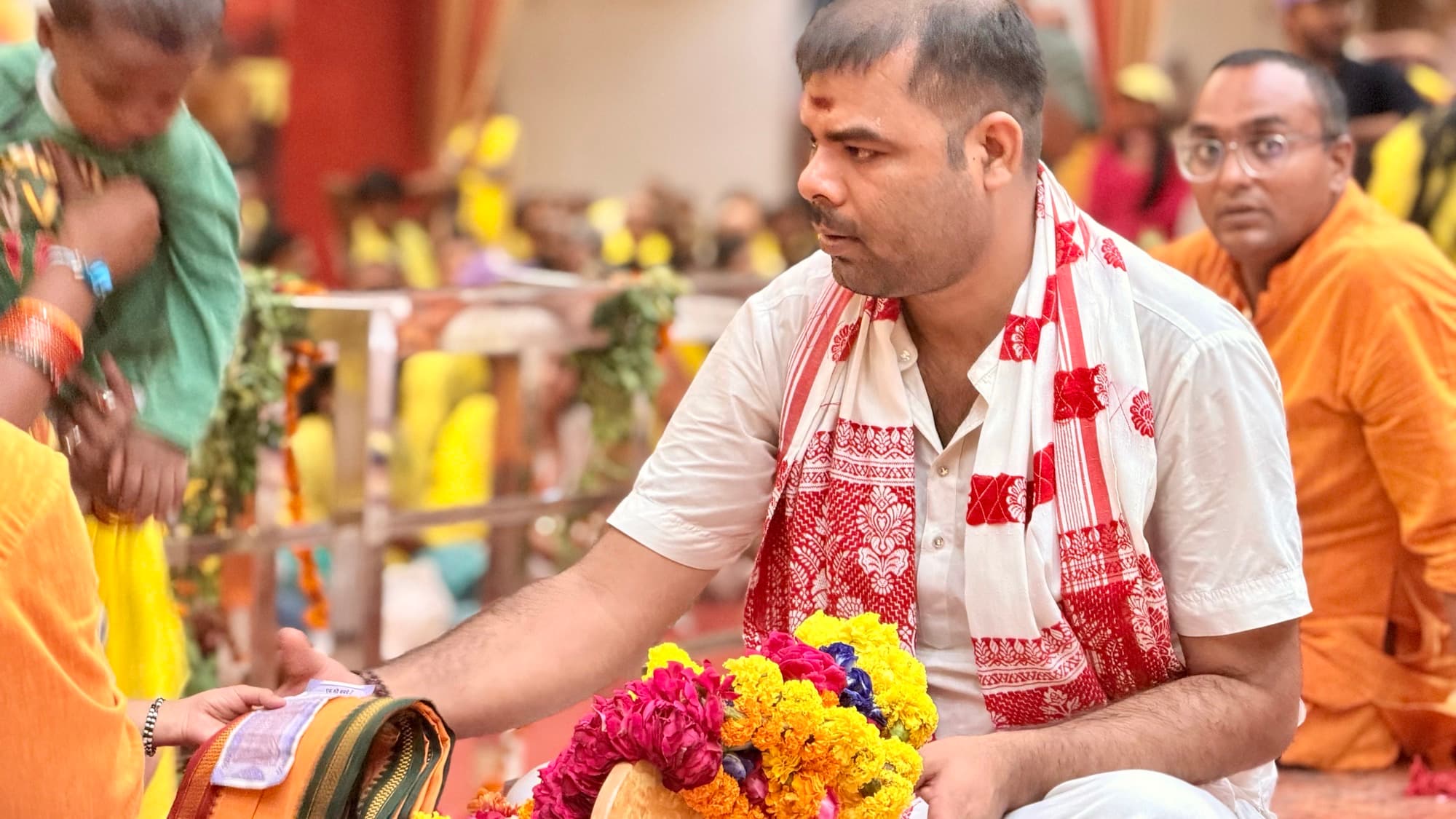
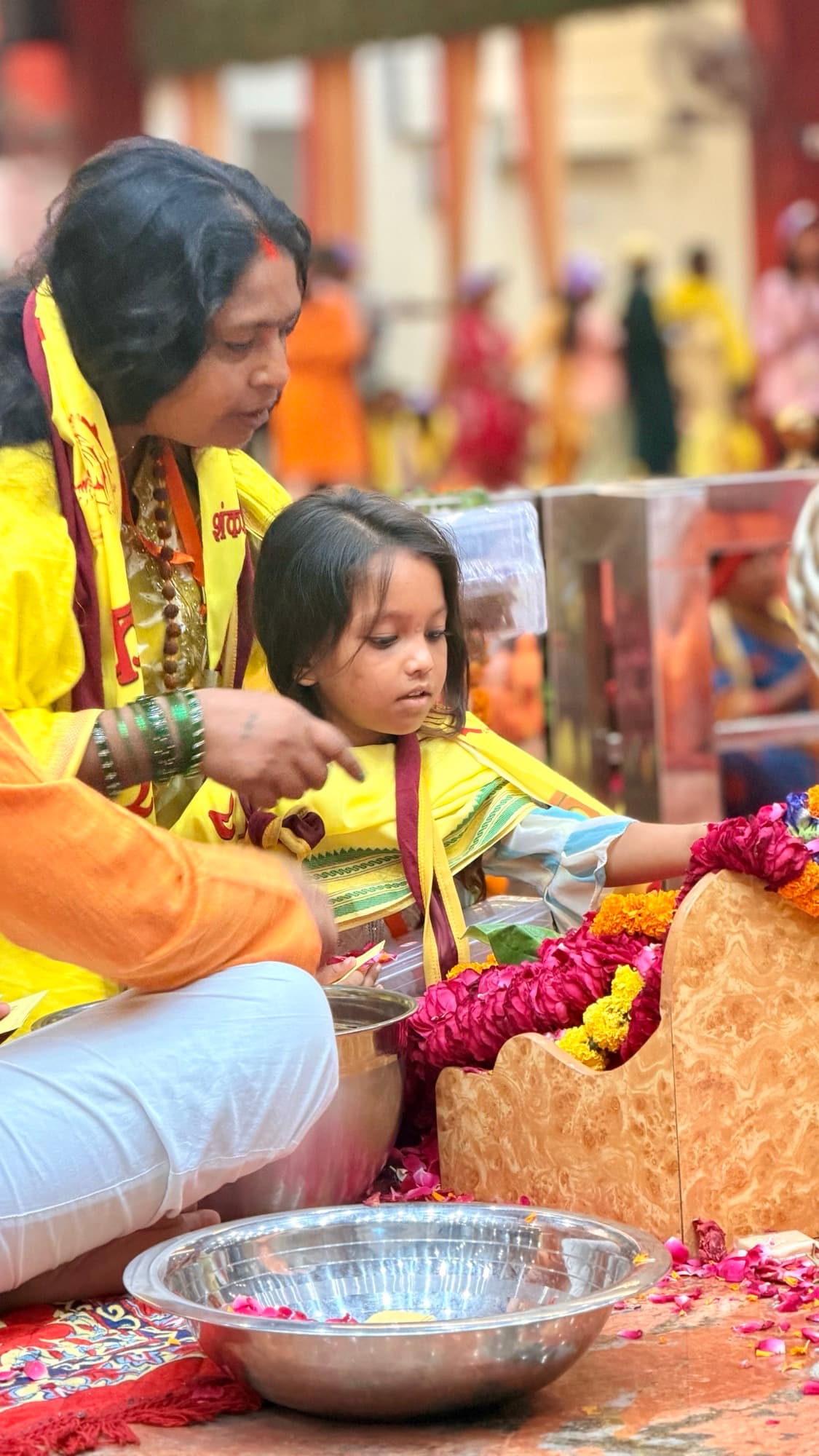
Service to saints, service to society, service to the poor and the suffering, service to great men — by service (Seva) your intellect becomes sharp. Your mind is focused. Your keenness is purified. And by meditation and spiritual practice (Sadhana) your chitta is purified — your causal body (karana sharira). Negative, diseased memories are destroyed. Only good memories remain, on the basis of which your life becomes easier still.
Seva is therefore necessary — and Sadhana is necessary too. Both must be done.
From devotee to disciple
Through me, through this body, you receive initiation (diksha) from Baba. You accept it — and from being Baba's devotee you become Baba's disciple.
When you first came to the Darbar — in what suffering were you? Raise your hands, how many were in suffering. When you first came, you were in terrible distress. And today — for whom does suffering vanish as if by a magic wand at the mere utterance of Baba's name? For everyone. You remembered the Mother, you remembered Baba — the diseased memory perished, your sufferings vanished. How many are in bliss today — raise your hands — by the grace of Baba and the Mother. All in bliss, nothing but bliss.
This bliss must be maintained. This bliss must be increased. This bliss must be sown around you in every direction, and you must prove that we are disciples of a true Guru, disciples of a perfect Guru.
On reverence for Grihasthas (householders)
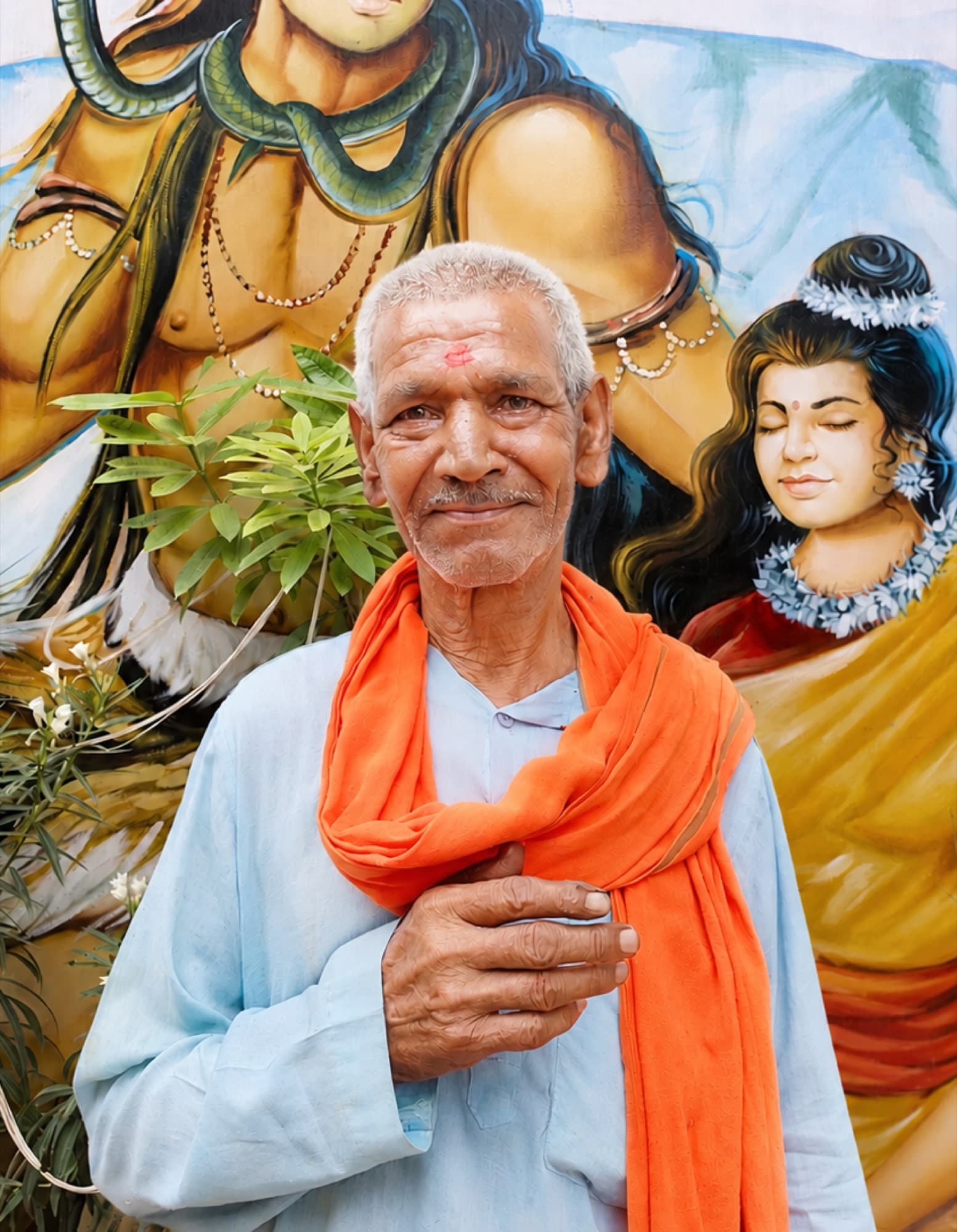
Many people raise questions. There was one respected Shankaracharya — a venerable, revered saint. Yet he looked upon householders (Grihasthas) as though a dog or a cat had come. He would ask: “Are you a householder, or a sannyasi?” And when someone said “householder”, he seated him at the back: “Go there, sit at the back. You, sannyasi, sit here.” The householders he had seated outside: “Let them come tomorrow, the day after, there is no time now.”
I said: “Brother, why so much aversion towards householders? It is precisely the householder who is the ground of your birth. He gave you this body. Learn to honour them. Had there been no householder, where would you have been born? You say the householder is low — and by that you are reviling your own parents. Do you even realise what you are saying?”
The Grihastha-Ashram is considered the greatest ashram — the place where proof is given, the examination of life. Whoever does not stand the test in the Grihastha-Ashram can never stand the test in society. Whoever does not stand the test in society can never stand the test in the Guru's class. Remember this.
First, then, you must stand the test within yourself, stand the test in the family — earn your “diploma” there. Then earn the diploma of standing the test in society. And when you perform service, the diploma of Sadhana you will earn of itself — before the Guru nothing needs be said.
Remember Adi Shankaracharya, whose statue stands inside the ashram. He went into Sannyasa already in childhood — at a time when a person cannot yet even look after himself. Two ashrams in the middle were thus left out for him: the Grihastha-Ashram and the vanaprastha-Ashram. The ashrams are four: first the brahmacharya-Ashram, second the Grihastha-Ashram, third the vanaprastha-Ashram, fourth Sannyasa. Our great men created four ashrams — twenty-five years for each, at an average lifespan of a hundred years, as it was reckoned then.
And do you know what happened? Adi Guru Shankaracharya had to enter the body of a certain king and taste all the joys and sorrows of the Grihastha-Ashram, to know them. When he returned, he had to look at society and taste it, and to know vanaprastha as well — only then, with two lived experiences, was he able to defeat the great scholar Mandana Mishra and his wife. Otherwise he would himself have lost.
These are those four ashrams. We must therefore honour everyone. A human being is a human being — whether in Grihastha or in Sannyasa, whether a bhakta, a disciple or a guru. Every person we must honour with one and the same gaze, honour in equal measure. When something goes wrong, let us have compassion and try to set it right. Out of envy and hatred what is spoiled will not be mended — rather you will be spoiled the sooner. Therefore avoid envy and hatred. What is spoiled, mend it.
Among us there is a whole team. “That one makes trouble, that one makes trouble, throw him out, drive him away!” I say only one thing: “Mend him. Set him right, he will be set right, he will become a good man.” Whoever comes in his place — who guarantees he will be better? It turns out that a person spends his whole life merely correcting everyone around him. Set right the one who is here. Life will then become easy.
The children misbehave? Set them right. You cannot exchange your children. You do not go to the grocer's and say: “Brother, exchange this child of mine for another.” It does not work like that.
Therefore attend first to the Samskaras towards yourselves: what are my own Samskaras? What is my own way of thinking? And remember — as your thinking will be, as your own Samskaras will be, so will the next generation be. The world is your creation. Nothing comes from outside. Everything comes out from within. Be vigilant, then, towards yourselves — and the next generation will be good of itself.
On habits and hidden memory
Brother, do you drink alcohol, do you eat meat? May you give it up — that is good. Take a vow. If you do not give it up yourself, it will come of its own accord and give you up; of escaping there is no question.
Sometimes I observe: when someone wants to stop drinking, the poor man takes vows, but it does not succeed. His wife comes and cries out: “Gurudev, he will not stop drinking!” And we see: the memory of drinking is inside that woman. And the vow is taken by that poor husband: “Unteach me drinking.” Unteach it to whom? I say to the woman: “You take the vow, that drinking may leave your husband.” And the moment the woman takes the vow — the drunkard vanishes, the memory perishes.
In this way memories remain hidden and strike from hiding. But everything is for the good. All is one Tantra.
On the word “Tantra”
The meaning of the word “Tantra” is arrangement, order (Vyavastha). To whatever this word is joined, order appears there. As in Loka-Tantra (democracy), Sva-Tantra (freedom), Raja-Tantra (monarchy) — wherever “Tantra” appears, order appears. Where there is an order, then, that is called Tantra. Where there is a disorder, that is called sorcery, incantation, conjuring and black magic.
Tantra is therefore an order. If we understand this order, we are able to live in it; and if we live according to Tantra, happiness flows from it. And if we live this way without interruption, our happiness becomes lasting. Uninterrupted happiness is called ananda, bliss. Ananda means remaining in the present.
Tantra is an order, and the order must be understood. Once you understand the order properly, once it comes to you as knowledge in the intellect, once you behold it — you will begin to live so. That is that order.
On the rite of initiation: what it means to be ready
(From the instructions accompanying the Mantra-Diksha — the expository parts only, without the ritual acts.)
Whenever you have no time for prayer or puja — you are travelling, in a car, on a train, on a plane, walking on foot, there is no time for puja, there has been neither bath nor meditation — do the same thing in imagination: with closed eyes meditate upon Bholenath, offer him water and flowers in your mind, let him smell the incense, bow to Baba and the Mother, bow to the Darbar — and open your eyes. By this alone the Darbar accepts your puja and your prayer. Your puja is complete.
Now two things must be attended to — and distinguished. At the time when attention must be given, attention must be given (dhyan dena). And when you are to turn inward to yourself, you must meditate (dhyan karna). They are two different things. It is not right to meditate when attention must be given. Our cow is hungry, we must give her fodder — and instead of that you sit down to meditate. That is the wrong way round. When work, service, is to be done — give attention. And when you are to turn inward to yourself — then meditate. When we work with others, we give attention; when we do something alone, we meditate. Both are Tantra, both are order. Always attend, then, to your order.
The further stages of the path
With that your Mantra-Diksha was completed. When you perform it, your recitation of the mantra amounts to sava lakh (125,000 repetitions). Then comes a tenth — 12,000 — that is the dashansh, which is recited in addition, and by it your mantra becomes perfected (siddha). Then you prepare for the first stage of initiation into Tantra-Kriya-Yoga.
If this preparation — the Mantra-Diksha — is performed properly, you will be granted entry into the first stage of Tantra-Diksha; otherwise you will not succeed even in the first stage. If you wish to succeed, therefore, give the greatest attention to the Mantra-Diksha you have received. The better you perform it, the better your devotion to the Guru, the deeper your meditation, the better your thinking, the greater your capacity and fitness — so will your examination in the first stage of Tantra-Kriya-Yoga turn out, and when you succeed in it, you will advance further.
The mantra goes up to the fifth stage. From the sixth stage of Tantra-Kriya-Yoga the work with the mantra ends — then you yourself become yantra, mantra and Tantra, and meditation (dhyan) alone suffices.
So far people have reached the sixteenth stage. From this evening the sevaks will tell you everything, and the selection (chayan) of those who are in Tantra-Kriya-Yoga will take place: whoever is at the first stage will advance to the second, whoever is at the second to the third — in order, if their fitness and capacity are in order. Many come with a plea to the Mother and to Baba: “Baba, let us succeed.” It has sometimes happened that half the people did not succeed. The Darbar therefore understands you, and strives that your purification may take place, so that you remain in good condition.
Address of the secretary of the Akhara (Jagtar Muni Ji)
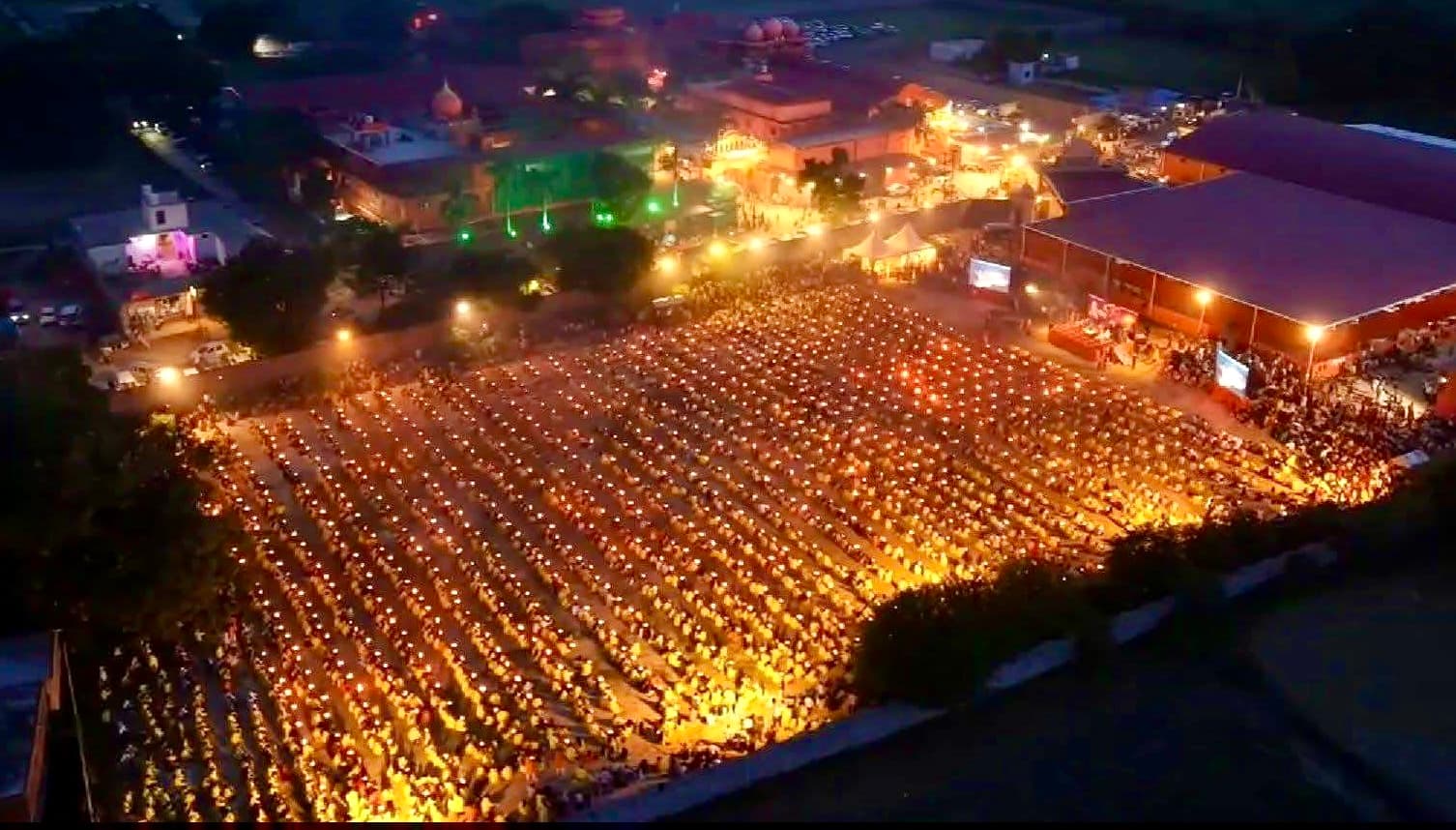
Today, on this great sacred occasion of Guru Purnima, an ocean of Samskaras flows here, the Ganga flows here. This is the backbone of our Sanatan.
The tradition that comes to us across the centuries — this land is the land of rishis and munis, the land of yatis, satis and holy women. It is the glory of Indian culture that it is karma-bhumi — the land of action, the land of Samskaras. All the avatars, pirs and prophets who came — all came to this Indian soil, gave their guidance and preserved our Sanatan. But certain apostates dealt a blow to that Sanatan culture.
Bharat, however, has again given birth to such a jewel which awakens once more the ancient tradition — the Vedic Sanatan tradition. He has taken a great burden upon himself and is carrying this tradition of Sanatan into every corner of the whole world. Today it is our pride that we too have such a Peeth (spiritual seat) as is the backbone of Sanatan — whence the tradition of Sanatan is born and arises, where education in Samskaras is received.
Today the greatest sorrow is that this Indian land, which for centuries was the land of sages, has become a land without Samskaras. Today no one is willing to exchange two loving words with the old, with their own parents. So deep have we fallen, so deep was our decline — that today the whole world laughs at us.
We are all firmly resolved that we shall carry away good thinking from this Darbar, that we shall go to our small villages and speak of this Darbar, and shall surely speak of our Samskaras, of our Vedic tradition, of our Sanatan tradition. And our land will surely regain its glory. It was once said that Bharat is Vishwaguru — the teacher of the world. We are to make it Vishwaguru again. When you come here, to this Darbar, and receive initiation, you carry this heritage of Samskaras onward.
I wish to say only one thing: in whatever country you are, abroad, in whatever surroundings — let the recitation of “Radha Raman” sound within you. That will be our basic formula of deliverance. Forget everything, only not Paramatman, not your Guru.
In the Markandeya Purana comes a verse: if such a great man grants you the knowledge of even a single syllable, then there is no thing on earth by the surrender of which you could free yourself of the debt to him. And the banner of our dharma will surely fly over the whole world.
The story of the king’s daughter and the impostor
The Guru has great significance in life. I shall close my address with one small story.
A certain king had a daughter. As soon as she had grown a little, self-knowledge (atma-bodha) came to her, the grace of the Guru descended upon her, and she began to converse with God constantly. Her parents thought their daughter must be deranged or feeble-minded — for she spoke with trees, with leaves, with creepers, with animals and birds, with everything. When that “madness” did not pass for a long time, the king understood: someone who has known Brahman has been born in our house. He arranged a special dwelling for her, had a special palace built, and said: “Daughter, live here and recite bhajans, meditate upon that Paramatman.”
In that same city there lived a thief who changed his appearance and stole, cheated and robbed people — with a false beard and hair. When he learned that the king's daughter was virtuous, noble and wealthy, constantly absorbed in God, and had much property with her, he said to himself: why not deceive her and rob her? He went to cheat her.
He said: “Daughter, it is the morning hour, I am a little thirsty. Might I have some water?” The girl said: “Yes, of course, maharaj, sit down, you shall have water.” She brought water. The moment he took it in his hand — he was, after all, an impostor — he said: “Have you received Guru-Diksha, or not?” She said: “Guru-diksha I have not received, I have never in my life accepted a Guru.” He said: “Then I shall not drink this water. It is said that one should not drink even water from the hand of one who has no Guru (nigure).”
The poor king's daughter fell into grave embarrassment: “It is a sad thing that a saint should leave my door thirsty.” She said: “Guruji, what is the solution?” He said: “Accept me as your Guru, receive Guru-Diksha from me — then I shall drink this water.” The girl said: “Very well, maharaj, as you wish. For I have been seeking a Guru and God has given me the opportunity — the Guru has been found. I shall certainly receive initiation from you.”
He said: “Child, initiation into the mantra does not happen here, it happens in a holy place, not in houses and palaces. For that one must go to the forests and mountains, to such rishis — there Guru-Diksha is performed.” She was a king's daughter, and she agreed joyfully: “Let us go, maharaj, I want the mantra, be it in the forest, in the mountains, in the ravines by the river.”
The impostor led her into the forest and said: “Daughter, take off all those ornaments of gold and silver and lay them aside, only then shall I give you the mantra. Turn away from these worldly adornments, renounce attachment and illusion (Moha-Maya).” She obeyed the saint's word, took off all her ornaments and laid them aside. Then he said: “Daughter, raise your hands.” She raised her hands and he bound her to a tree and said: “Daughter, until I return, remain bound like this. When I return, I shall untie you and give you the mantra. Until then wait for me.” She said: “Very well, Gurudev.” She closed her eyes and raised her hands upward — and that impostor bound her to the tree with creeping vines, took the whole house (the property) and departed.
Two days passed, four; when the king's daughter did not return, the king learned that his daughter had disappeared. He sent his scouts. They went to search the forest and at last found her. They asked: “Daughter, who brought you to this state?” She said: “My Guru came. He wished to grant me Guru-Diksha and told me to remain here.” — “But he has bound you! That is not remaining — he bound you and left, you will perish!” The king's daughter said: “Let me lose my life. But until my Guru comes, I will not have these bonds untied. Go back.”
The scouts returned and said to the king: “Maharaj, she has set her mind on it, that until her Guru comes she will not free herself from the bonds.” At last the king went himself: “Daughter, stop this, let it go. He was not a saint, he was an impostor, you have been deceived. Come back to the palace, perform your bhajans and bhakti. And beware of such impostors — it is the world, do not let anyone cheat you.” She said: “Be he an impostor or a true one — of the Guru it holds: Though the Guru be blind, though he be deranged, remain the Guru's servant. Should the Guru send you to hell, let your hope rest in heaven.”
In the end the father too went away helpless. Six days passed, ten. Without food or water she remained bound to that same tree. At last God thought: she is a king's daughter, there is no fault in her, surely her bonds must be untied.
At last God said to Narada: “Narada, go and free that girl from her bonds.” Narada came and said: “I am a messenger of God, God has sent me. I have come to release you from your bonds.” The king's daughter said: “No. I will not have the bonds untied by you. It is my Guru who will come and untie my bonds. Apart from him, no one…” — Behold her faith (nishtha). It is faith that brings a person to Paramatman. Faith alone unites one with God. In a servant there must be devotion, faith and trust.
She refused even Narada. When Lord Vishnu himself could not bear the suffering of that girl, he came to her on Garuda. He assumed his four-armed form and said: “I am Narayan himself, and I have come to give you darshan.” She said: “Be you Narayan or anyone else — until my Guru comes, until my Guru frees me from these bonds, I will not have them untied. It is my Guru who will show me the way to Narayan.” He said: “I shall bring you together with Narayan, through the Guru I shall free you from the ocean of worldly existence.”
At last Narayan said: “Narada, go and bring that false thief from wherever he is. He cheated this king's daughter and went away.” Narada went. In one village that thief was just then smearing his face with soot and changing his appearance. Narada seized him and brought him: “First free this girl from her bonds.” And so at last that impostor freed the girl from her bonds. The king's daughter fell at the Guru's feet and said: “Maharaj, thanks to you, by your grace — whatever may have happened — by your grace I have attained the darshan of Paramatman.”
This is a living example of devotion (bhavana), faith (shraddha) and trust (vishvas). Therefore you too resolve firmly in your mind: “I am to join the Darbar and remain joined, and to make my life healthy and free of disease.”
Friends, this is no new tradition that maharaj has introduced — it is the science of our Vedas, our ancient arrangement. Of the recitation of mantras the Vedas say that by the recitation of a mantra too the attainment of Paramatman and the purification of the mind come about. Therefore there must be trust in the Guru, reverence for the Guru, respect towards the Guru.
I shall say no more on this festival of the Guru — all who have come from every corner of home and abroad, I warmly welcome and greet. I thank all, I bow to all. Hari Om shanti, Hari Om shanti.
Gurudev’s word on the secretary’s story
Our secretary has, in beautiful words — by the example of a story — presented that parable. It is very lovely and worthy of contemplation.
Therefore I say again and again: whatever the Guru may be, if the disciple's trust is firm, it is that trust which brings him to perfection. Surrender to the Guru without doubts — it is that surrender which brings him to perfection. Always remember this. Without surrender nothing happens. You have surrendered — you are at the goal.
The story of walking on water
There was a Guru. A certain man came to him and said: “I want to walk on water.” The Guru said: “Walk on water?” — “Yes, give me initiation.” He gave him initiation, gave him a mantra, and the man went and began to recite it. He who gave the initiation had never himself walked on water. The Guru thought: “He is a fool. Well, at least I have peace from him.” Somehow he went away.
One day people said to the Guru: “Your disciple walks on water and crosses the river.” — “How is that possible?” He went and asked: “How?” The disciple said: “Gurudev, the mantra has become perfected, for it was you who gave it to me.” And yet Gurudev had given him the mantra then quite at random, so as to have peace from him. The disciple's trust had won.
The Guru said: “Show me.” The disciple demonstrated walking on water. The Guru thought: “If the disciple can do it — and I myself gave that mantra — come, let me try it too.” And the moment the Guru stepped out of the boat into the middle of the current, he began to sink in the water and floundered about in it.
The Darbar therefore says: it is the disciple's surrender and trust towards the Guru that leads him to perfection, they alone that fulfil him. No doubts — what has been said is to be kept. In this way the great men tried many times, through parables, to show people: keep your trust firm. If you doubt the Guru, you doubt yourself.
Blessing of the mukhya mahant (Shri Bhagat Ram Ji)
To all of you pilgrims who have arrived at this Karauli Dham on the occasion of Guru Purnima — many blessings, many congratulations.
The glory of the Guru's merit and guru-dakshina comes once a year. Then, through guru-dakshina and the Vedic tradition, the havan rite, they perform your purification, join you with this place and with the Guru, cleanse your sinful deeds of past lives and grant you initiation. They strive to set you on the right path. You are very fortunate — and to the Mahamandaleshwar who performs this, great thanks as well.
You have the company of saints (satsang), the darshan of saints, you walk the path of saints. In many of our scriptures, shastras and Vedas it is written: where saints and great men take their seat, there the merit of bathing in sixty-eight places of pilgrimage is obtained. In the Guru Granth Sahib comes a verse: wherever the foot of saints treads, there the merit of sixty-eight tirthas comes about; where the name of God is recited, there Vaikuntha (heaven) arises. You are sitting in this Vaikuntha. You are very fortunate. The tapasya of your parents from past lives has been performed for you — therefore you perform the darshan of saints, therefore you walk the path of saints.
The company of a saint, service to a saint, the name of a saint — these are rare people to whom this is granted. Not everyone has the fortune and the effort to keep the company of a perfect saint, to serve him or to receive guru-dakshina. Those who performed merits in past deeds, whose parents performed merits — in whose house such offspring are born who obey their parents, live in Samskaras, serve gurus and receive initiation from gurus and walk the path to Vaikuntha.
Without the Guru there is darkness. A verse comes: even were a hundred moons to rise and a thousand suns to appear — even in such light, without the Guru there is dense darkness. Without the Guru there is nothing but darkness. “Gu” means darkness and “ru” means light — he who leads out of this darkness is the Guru. Through the Guru's word, through service, the Vedic tradition and the rite, he destroys one's sins and brings one into the light.
You are very fortunate, you who come here to serve with shraddha, devotion and trust. There are many promises. Those great men who attained God by shraddha: Namdev attained the darshan of God seventy-two times. And the devotee Dhanna — to whom a brahmin, out of self-interest, gave a piece of a broken shaligram and told him to worship it, serve it, bathe it and offer it food, and it would give him darshan — by his shraddha, with stubbornness, sat down; for many days; and when God came, he attained darshan. By shraddha, devotion, stubbornness and tapas God gives darshan.
To the Mahamandaleshwar Swami Maharaj Karauli Shankar Shankar Das Ji Maharaj I bow deeply and give thanks. I thank the whole sangat. Om shanti shanti shanti.
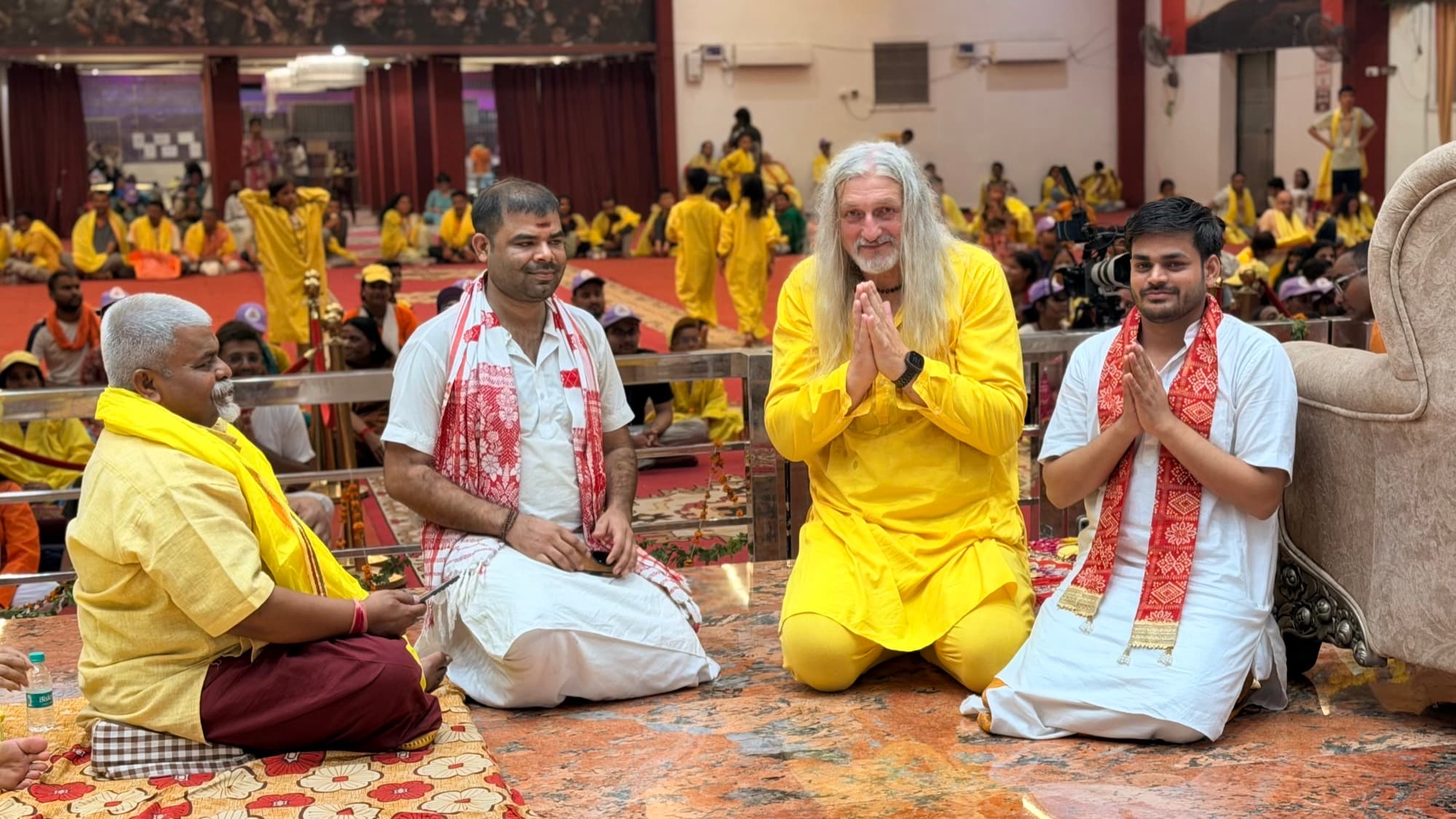
Turning to meditation, and the launch of the magazine
For the words of blessing and guidance our mukhya mahant has granted us, we are grateful.
Afterwards the Mantra-Diksha will take place inside, in the Shiva-Shakti Darbar. In you the purification and fulfilment (shuddhi-siddhi) has already taken place, in the sense that you have disconnected from everything external and connected with your Guru tradition — so that external impurity may not touch you, may not cause you suffering, may not destroy you. By this you have become fit for the Mantra-Diksha.
There is also a magazine of the Darbar — the monthly Prime Times — which is to be ceremonially launched today; and a further booklet, Gyana Satta. They will bring news of the Darbar of every kind and reach all the saints. Through this magazine you will regularly receive much news of the Darbar, including the testimony of people as to what change came about in their lives after they came to the Darbar.
A note on the translation: What is translated are the addresses to the people — the opening welcome, the main discourse, both parables, the words of the secretary and of the mukhya mahant, and the framing instructions for the initiation. Omitted are the songs, the singing of the sangat, the recited mantras themselves and the mechanical steps of the rite (offerings, guided meditation and the like). Sanskrit and Hindi terms are kept in transliteration, and their sense is explained from the context.